Planting the Seed: Growing a Mandarin Immersion Montessori Community in Philadelphia
Dale You left a finance career to found the Philadelphia Chinese Academy, and she measures its success by the students who thrive there and the teachers who have found their footing alongside them.
Dale You has been the new kid in an unfamiliar place more than once. At age 10, she arrived in Boston from northeastern China speaking no English, worked her way into a partnership at a New York fund, and commuted from Philadelphia to New York City by Amtrak when one of her children was an infant.
Today, she leads Philadelphia Chinese Academy, a Mandarin immersion Montessori school in Center City. Her days are spent less on the classroom floor and more on the people who run it. She mentors new teachers on her own time, helps them find housing, and paves their path to certification. Ask her what she’s proudest of and she will steer the credit toward them.
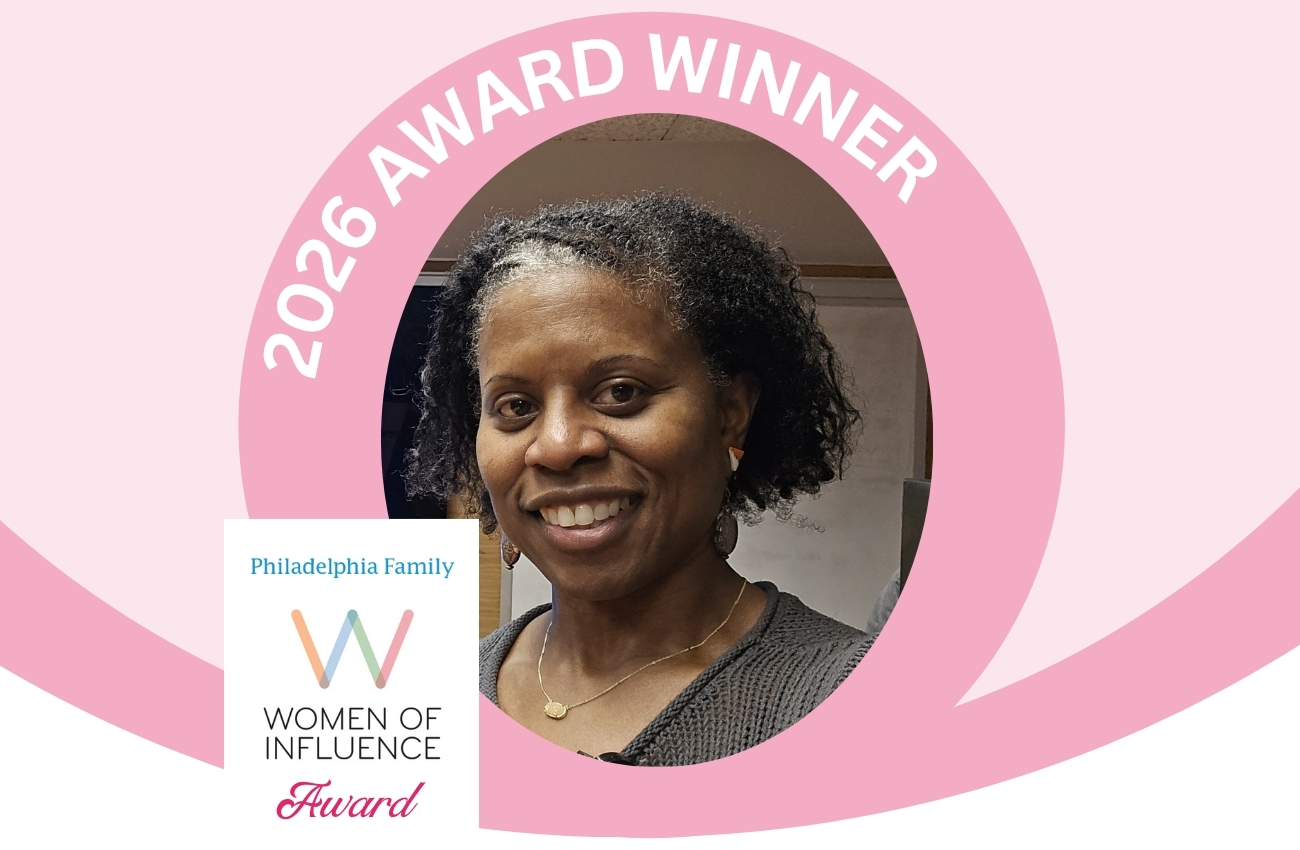
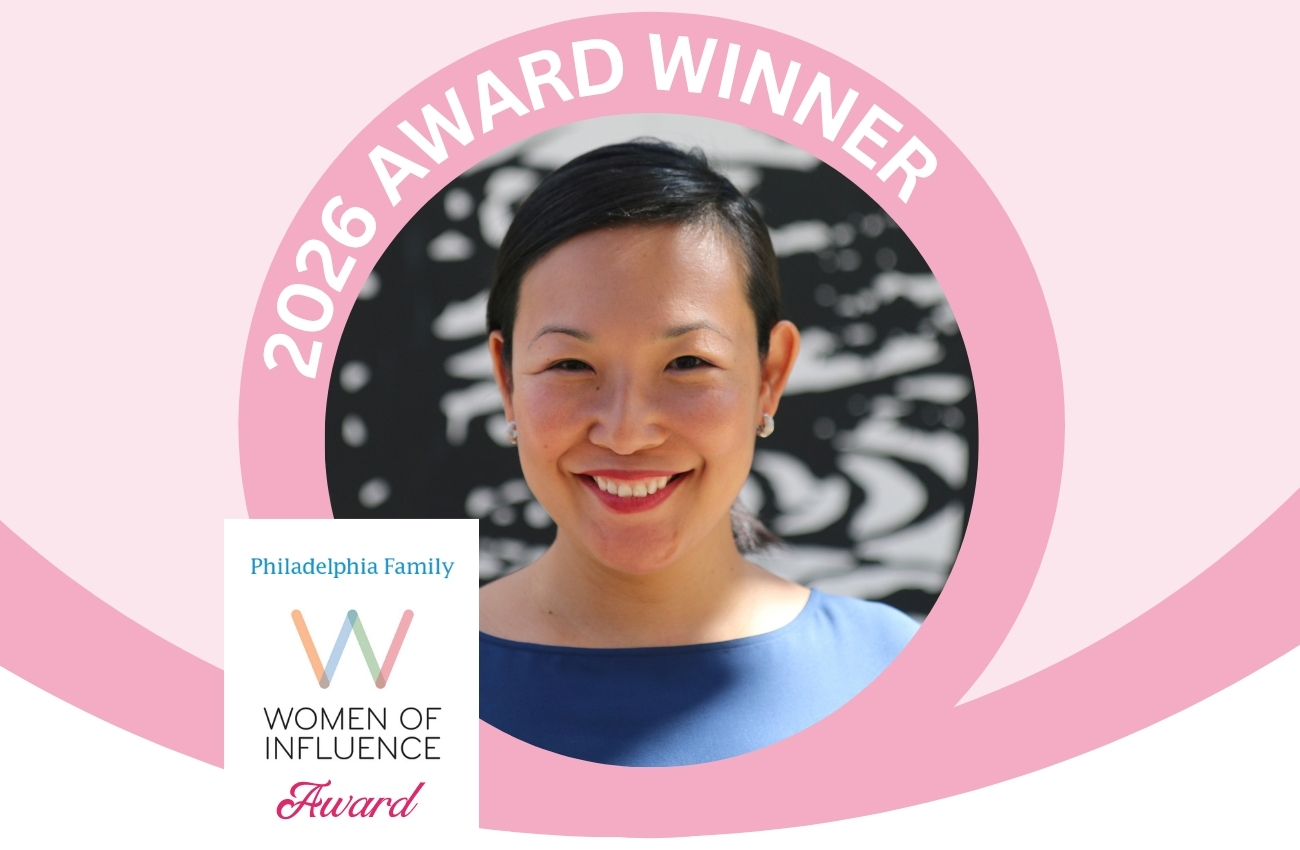
Dale You is a 2026 Philadelphia Family Women of Influence Award Winner
Philadelphia Family’s Women of Influence Awards celebrate exceptional women making significant impacts in our community. Dale was nominated by Erica Chen, whose child attends Dale’s school, and selected based on her achievements and dedication to creating positive change. Each Women of Influence Award Winner has committed to support Family Focus Media’s core values. Together, we are committed to fostering a sense of belonging and empowerment for all families. All backgrounds, races, genders, and sexual orientations are welcome and safe with us.
Beyond the awards, our Women of Influence Luncheon and Speed Networking Night attendees come together as our Women of Influence Network, a community fostering connections, collaboration, and mutual support.
The Girl Who Read English in Chinese
Dale grew up with extended family in China. She joined her mother in Boston’s Back Bay at age 10, where her mother was pursuing a PhD. “It’s very ritzy now, but it was not ritzy back then,” Dale notes. Upon her arrival to the United States, Dale attended Boston public schools. “I felt like I was dropped in a hole,” she says of that time. “It was really isolating.”
Her first classroom reading assignments came with a workaround. Her mother wrote Chinese characters above the English words so Dale could sound them out. “So for the word ‘cat,’ she would mark the two characters that sounded like cat on top of the word cat for me to read passages.” Her mother also enrolled Dale in a bilingual program, not realizing the Chinese spoken there was Cantonese which is totally different from the Chinese dialect that Dale knows. Dale said nothing about it. “I saw people who look like me and I was like, ‘oh, I like this.’”
For high school, Dale got into Boston Latin School near the bottom of the ranking and worked her way up. Although Dale says she didn’t become comfortable with English until college, her Chinese-language skills later helped her land a job at Morgan Stanley and a transfer to its real estate group in Hong Kong.
Her career took her across China, the US, London, India, and the Middle East. Each move meant starting over: learning how to navigate a new place and manage everyday essentials, from getting an ID to opening a bank account. That experience gives her a personal understanding of the challenges some PCA teachers face as they begin a new career and build a life in a new country.
A Seat That Didn’t Exist
On paper, Dale says, she was very successful. Behind the scenes, she felt underwater. She had a young baby, a husband still early in his career, and a childcare arrangement that fell short. She stepped back from finance while pregnant with her second child, and the quiet that followed was disorienting. “I felt like I lost a big part of my own identity,” Dale shares.
She also couldn’t find the type of preschool she wanted for her first child. Seats were scarce in Philadelphia, and a high-quality preschool, she says, felt like it required personal connections which she didn’t have.
She helped the founders of a wonderful Montessori program expand into a bigger space, which taught her how to set up a school. Then, she spent a year asking Montessori schools around the region to add Mandarin immersion to their programs. Most had never heard of it. The founders from the Montessori school she helped to expand said “yes, but in a few years.” Dale didn’t want to wait, knowing her own children would not benefit. So Dale’s husband encouraged her to create the school herself.
On Christmas Day 2018, after the presents were opened, Dale built a website and registered a company. The first class met in borrowed space over a weekend with five children in attendance, four of them Dale’s and her partner-teacher’s. One paying family found them online. Full day preschool licensing took years, but the preschool finally opened in 2020, just as the pandemic arrived. The Philadelphia Chinese Academy stayed open for the children of the city’s first responders. “We felt like we were first responders too,” Dale says.
Mandarin Immersion Montessori: What Makes It Hard
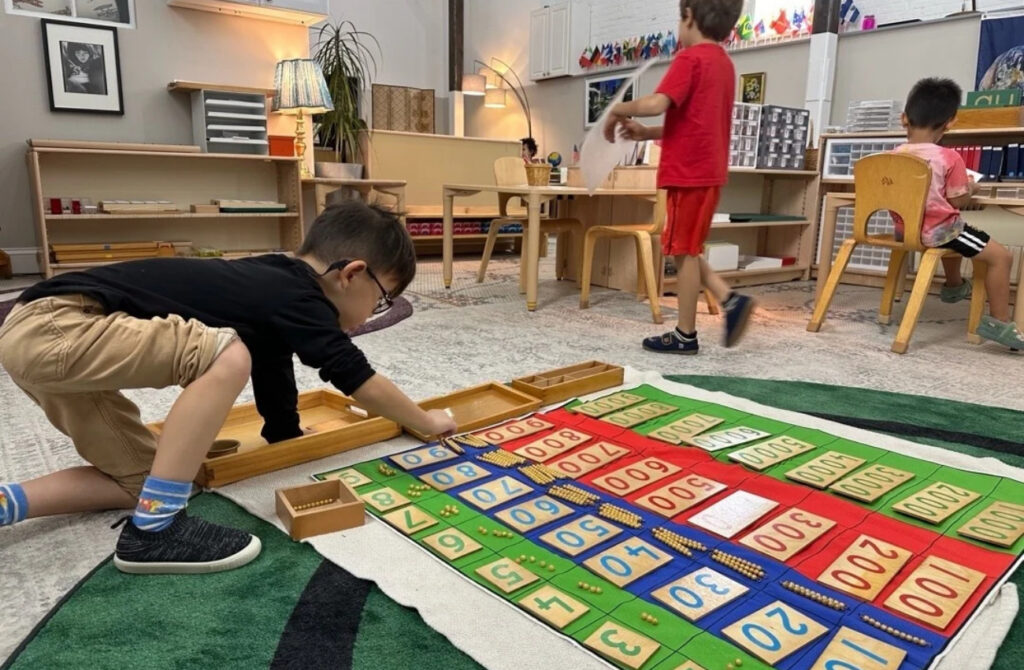
Ask Dale about the day immersion almost failed and she quickly corrects that premise. “It wasn’t a day, it was years and years.” Teachers, even experienced ones, would drift into English whenever children tested them, and children quickly learned which language was easier. Then, in August 2022, most of the staff members left, and the school faced a major rebuilding period. “It was a very dark and difficult time,” Dale says, and she questioned whether “(she) was bad a leader.”
Dale and Marjorie Horton, a longtime Montessorian who was the Educator Coordinator for a Head Start program that started many childcare centers in Philadelphia, rebuilt Philadelphia Chinese Academy from what was left. Marj insisted on training people in person and in-house. Dale hired from the resumes that came in, and six people with about 30 children held the school together that year. One was Ms. Pearl, a Montessori-trained teacher who joined in July 2022, and despite seeing multiple departures, stayed through the difficult rebuilding period. Ms. Pearl took a real leap of faith.
Dale also points to her daughter’s experience as evidence that the approach could work. “I saw her Mandarin bloom,” she says, even as she went through three different teachers during the early years of the school. “She was really the guinea pig. If it could work for her, it could work for any child,” Dale thought.
It took Dale eight years to finish her own Montessori certifications. “I think I was at the end of available extensions,” she says. Dale obtained both the Infant/Toddler and Early Childhood American Montessori Society credentials to deepen her understanding of development and language learning from birth through age six. Dale wants to use her certifications to support her teachers rather than teach.
The People Who Make the School
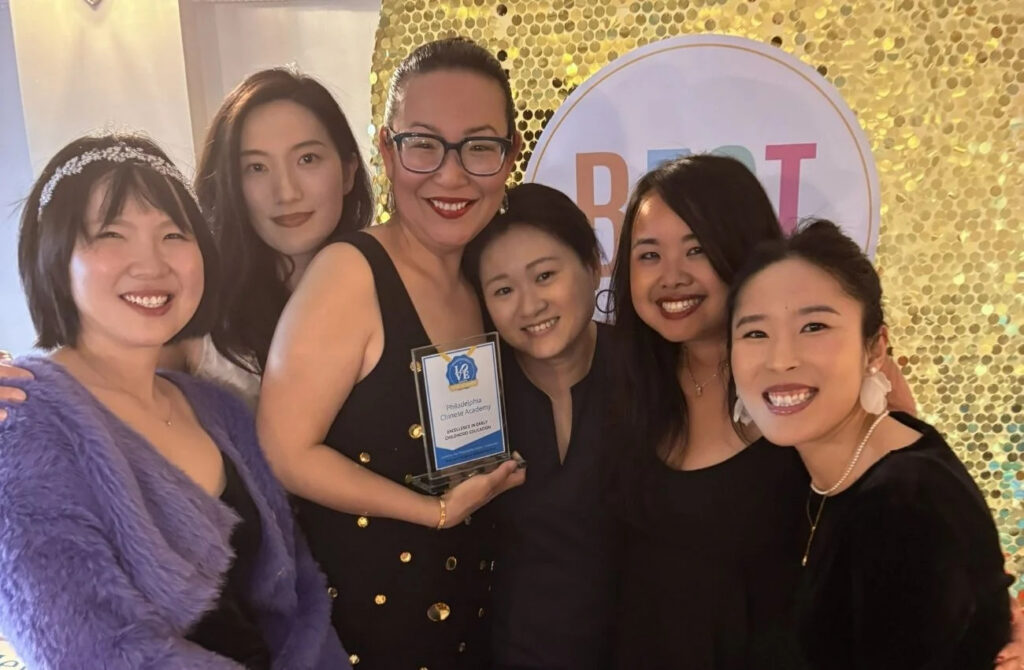
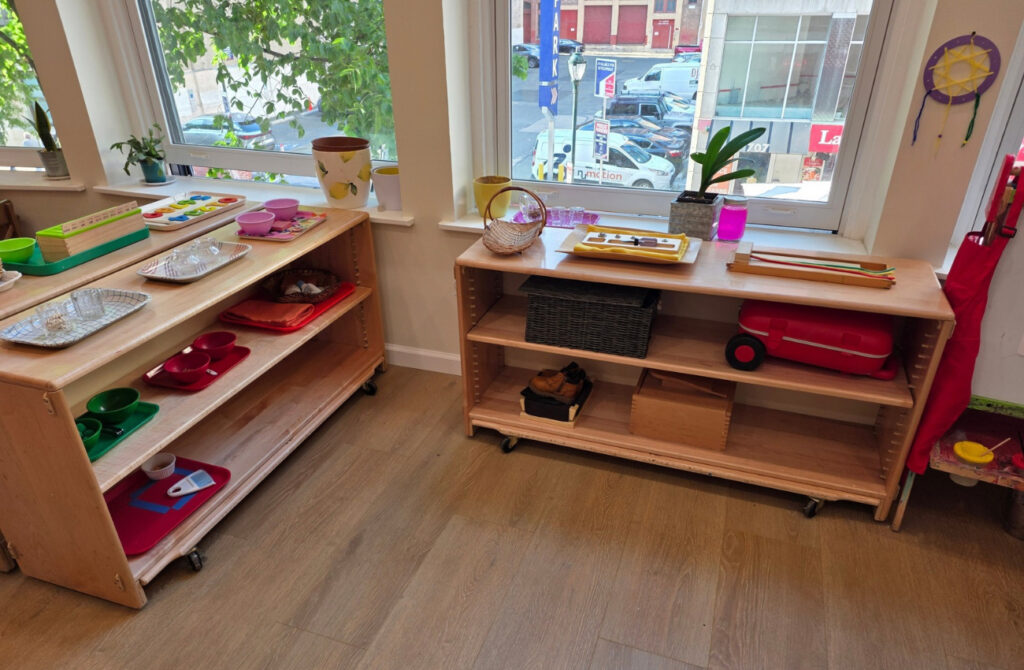
Today, the school serves approximately 50 children ages 18 months to 5 years. Combining authentic Montessori education with a fully immersive Mandarin-speaking environment led by native-speaking educators, PCA nurtures independence, critical thinking, confidence, and a lifelong love of learning. Children acquire Mandarin naturally through everyday interactions, hands-on Montessori activities, music, and play, while developing a strong foundation for bilingualism and cultural understanding.
Dale’s attention is often on the school’s educators. Many of the teachers are immigrant women who bring a wealth of professional experience, academic achievement, and cultural perspectives to the school. Some had already established successful careers in their home countries, while others hold advanced degrees from American universities. Yet even for highly accomplished individuals, building a new life and career in a new country can mean navigating unfamiliar systems, establishing professional networks, and finding a sense of belonging. These are challenges Dale understands firsthand from her own life. “They’re starting their lives from scratch in a foreign land, often leaving behind friends and family,” she says. Recognizing both their talents and the challenges of starting anew, Dale strives to create an environment where these educators can build on their accomplishments, grow professionally, and find a community in which they, too, can thrive.
Dale’s answer to the challenges that her educators face is concrete. When teachers first arrive in Philadelphia, the school offers eligible employees temporary, subsidized housing within walking distance of the school and near Chinatown grocery stores, while they get settled. Additionally, she provides them with a teaching job with a package including retirement matching, health and dental coverage, and housing support.
Through the school’s in-house training institute, IMTEI, teachers can pursue Montessori training. The institute is currently seeking MACTE accreditation and an affiliation with the American Montessori Society. The intern teachers are offered mentorship from a seasoned team of Montessori elders and paid practicum placements after their academic coursework.
Dale says there are still some hard days when teachers are “afraid to just try again because somehow the kids aren’t listening.” Her message to them is a small one: “What you need is already in you.” She wants her teachers and staff, all women, to get past the fear of not being good enough. “Doing anything well takes patience and practice. When teachers feel supported, they have room to grow, and children learn from that, too.”
RICE and MORE: The Values Behind the School
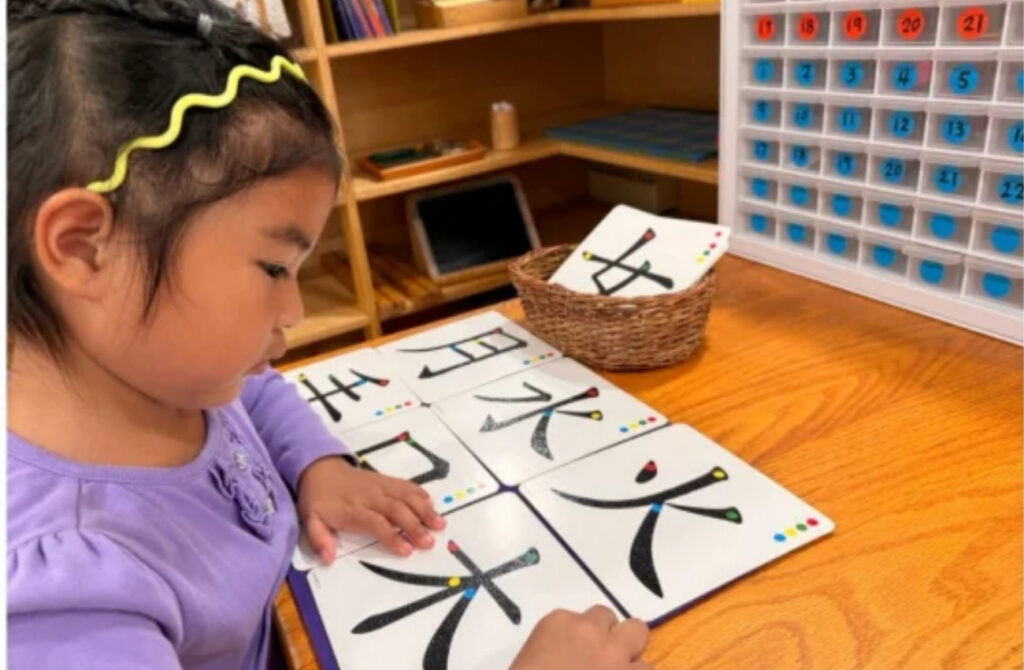
Dale has built the school around a philosophy she calls RICE MORE. RICE stands for Respect, Independence, Consistency, and Empathy, the values that guide how teachers support children each day. MORE represents the qualities she hopes children will develop over the foundational years of their life: Motivated, Organized, Resilient, and Empowered. Through Montessori education and Mandarin immersion, children practice these values in everyday experiences, from choosing their own work in the classroom to walking to nearby city parks and learning that red means “stop” in Mandarin. Together, RICE MORE reflects Dale’s mission to nurture confident, compassionate global citizens.
The school offers income-based financial aid and accepts subsidies, and its tuition and payments page explains how to apply. Dale also hosts parent workshops on early independence, literacy, and language. Many of the families she serves are second to fifth generation Chinese-Americans who have lost the language. “They can’t connect with their elders” and she wants to change that.
That awareness of what families need shows up in smaller ways, too. Erica Chen, a parent at the school who nominated Dale, describes how carefully Dale considers weather-related closures, knowing that unexpected school closures can create real challenges for working families. While children’s safety always comes first, Dale understands that keeping the school open whenever conditions allow makes a meaningful difference for parents. Chen sees this thoughtfulness as part of Dale’s “quiet determination that reflects her Boston roots.”
What Comes After
Dale hopes to bring a Spanish immersion Montessori program to Philadelphia next. She says plainly that she doesn’t yet know how, and she is looking for a Spanish-speaking Montessorian partner to lead it. “I’m the first one to admit, no, I don’t know what I’m doing” Dale comments. She has said that before but with the right systems in place and an open minded team, the Mandarin program grew anyway.
Dale’s advice to anyone wondering where to start is modest. “It’s going to be hard and bumpy, but be MORE.” She hopes the school’s teachers will keep growing, staying motivated, organized, resilient, and empowered. And for the long middle stretch when nothing seems to be happening: “A seed is really small, but it can grow into a mighty tree. You have to keep giving it sun, you have to keep giving it water. Just be patient with yourself.”
Follow the Philadelphia Chinese Academy on Instagram and Facebook, and connect with Dale You personally on LinkedIn.
Curious about Philadelphia Chinese Academy? Schedule a tour to meet the community and see the school in action.
Help us honor Dale by sharing what her contributions mean to you in the comments below.