Nicole Dugan: The Philly PT Bringing Pelvic Health Out of the Shadows
For nearly three decades, Nicole Dugan has built pelvic health programs from overlooked corners of medicine into lifelines for patients from age 10 to 100, while training the next generation of therapists in Philadelphia and
Nicole Dugan still remembers the exact moment her 5-year-old daughter set her straight in the car. The family was barely past the Philadelphia city limits on a road trip. Her daughter announced she needed a bathroom. “Just squeeze your inside muscles,” Dugan told her, hoping to buy a few more miles. Her daughter looked at her and said, “But mommy, all of the muscles are inside.”
It’s a fair point, Dugan will tell you, from a child who grew up hearing the actual names of body parts. It is also the whole premise of her career in miniature. The muscles that run our most basic functions are invisible, rarely discussed, and almost never taught. Dugan has spent 29 years trying to change that.
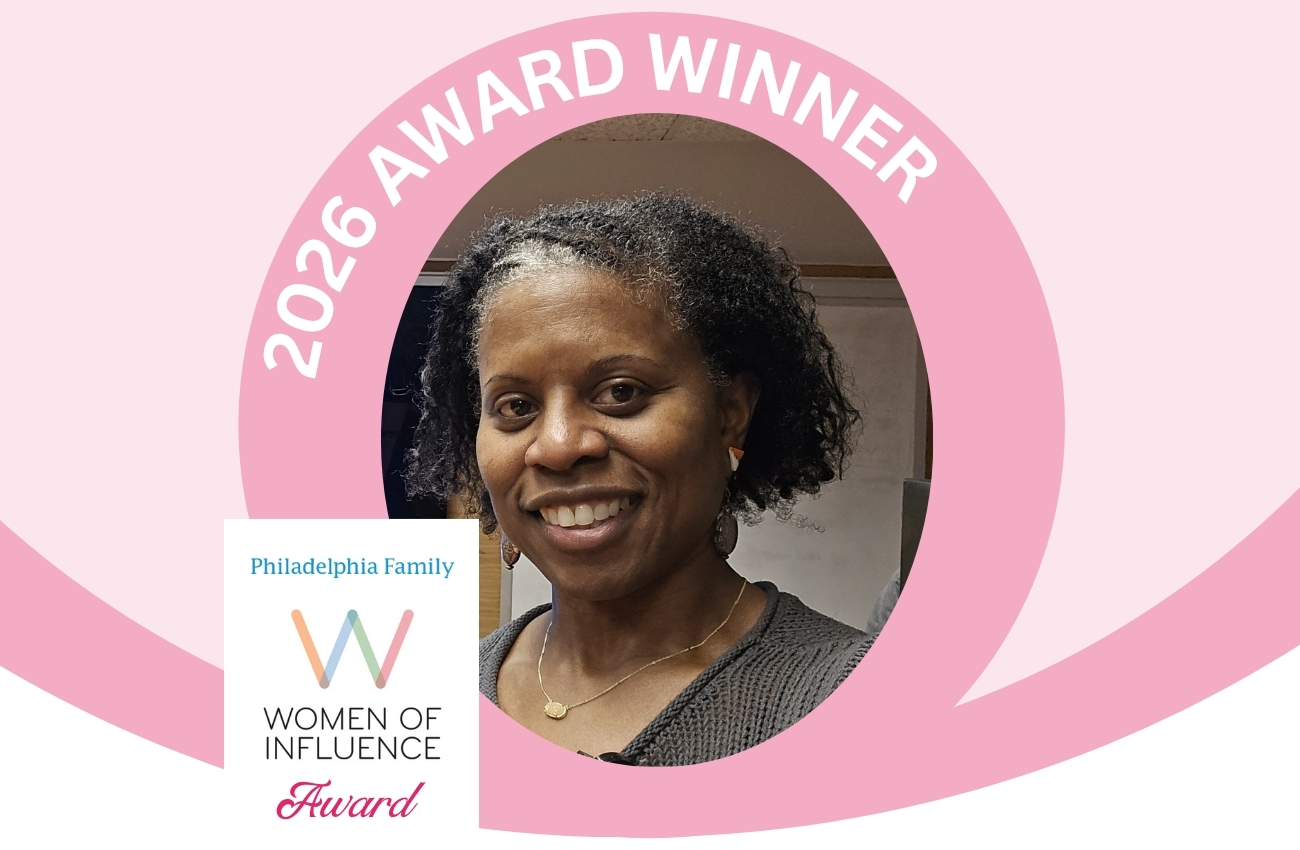
Nicole Dugan is a 2026 Philadelphia Family Women of Influence Award Winner
Philadelphia Family’s Women of Influence Awards celebrate exceptional women making significant impacts in our community. Dugan was nominated by her twin sister, Nadine Durham, and selected based on her achievements and dedication to creating positive change. Each Women of Influence Award Winner has committed to support Family Focus Media’s core values. Together, we are committed to fostering a sense of belonging and empowerment for all families. All backgrounds, races, genders, and sexual orientations are welcome and safe with us.
Beyond the awards, our Women of Influence Luncheon and Speed Networking Night attendees come together as our Women of Influence Network, a community fostering connections, collaboration, and mutual support.
A Career Built on Timing and Persistence
Dugan graduated from Temple University’s physical therapy programs. She earned her master’s in 1997 and her doctorate in 2003. She arrived in the field just as rehab reimbursement cuts were squeezing her new profession. Almost by coincidence, though, the NIH’s Women’s Health Initiative was pushing her employer, Penn Medicine, to invest in a pelvic health program. “It really was serendipitous timing,” Dugan says.
At the time, Penn wasn’t covering continuing education or professional membership dues. Even so, when the hospital offered specialty training in an emerging field, Dugan said yes. Eighteen years at Penn Medicine and Good Shepherd Penn Partners followed. There she helped build the pelvic floor and lymphedema rehabilitation program. She also helped earn APTA accreditation for a Women’s Health Residency Program.
In 2015, Dugan joined Jefferson Health. She leads the pelvic rehabilitation program at Jefferson Moss-Magee’s Center City location. She treats patients across genders and ages, for everything from pregnancy-related pain to pelvic oncology recovery.
Why the Pelvic Floor Never Gets to Rest
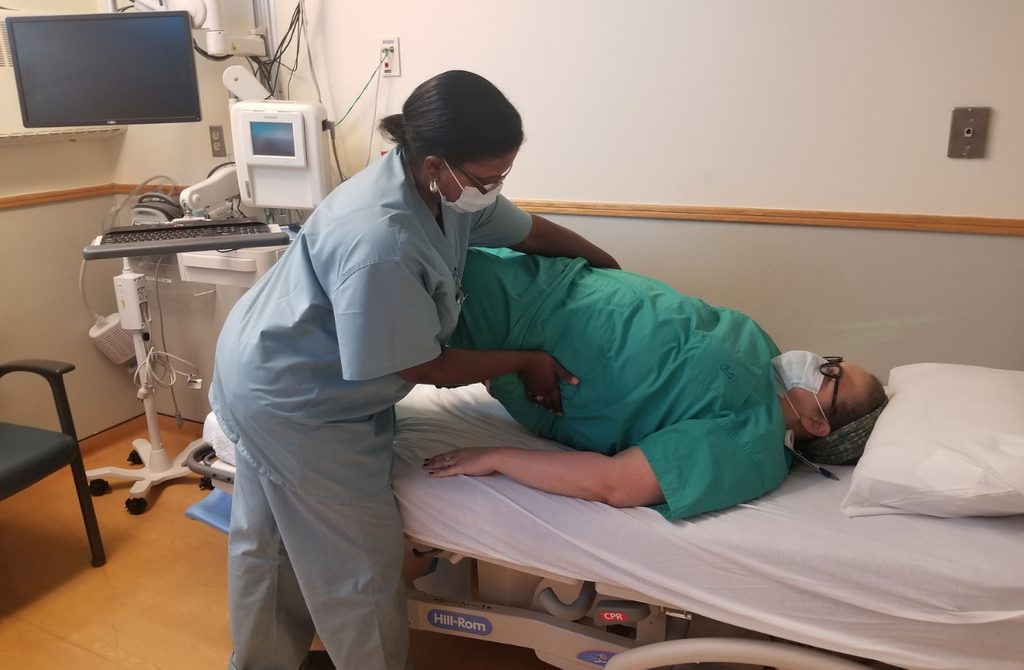
Some colleagues still dismiss the field as niche. What keeps Dugan in it is not the credentials but the physiology itself. “There’s no such thing as pelvic rest,” Dugan says. “It’s always working, and it’s got six major functions.”
Unlike a sprained ankle, the pelvic floor can’t be braced and rested. It cannot take time off. Dugan has watched research increasingly confirm what she long suspected. No medication, surgery, or device replaces the need to teach, and reteach, people how to use these muscles correctly. As Dugan puts it, “regardless of your impairment or the symptoms that you’re describing, you still have to be able to use this vital set of muscles.”
She holds board certification as a Pelvic & Women’s Health Clinical Specialist through the American Physical Therapy Association. She is also a Certified Lymphedema Therapist.
A Second Language: Organizational Development
Dugan’s medical credentials sit alongside a master’s in organizational development. She pursued it after watching Penn Medicine and Good Shepherd Rehab merge into a single organization. She was fascinated by how and why the joint venture did or didn’t hold together. Her capstone focused on organizational alignment, using the McKinsey 7S framework. Dugan still leans on that model as her health system goes through continuous growth and mergers.
“Does the system allow each practitioner, the neuro specialist, the ortho specialist, the pelvic floor practitioner, to still be optimized while we’re all working towards the same goal?” she asks. It’s an unusual second language for a clinician to speak fluently. As a result, colleagues turn to her as a leader, even without a formal management title.
Teaching From Philadelphia to Kenya

Dugan’s teaching runs well past the Jefferson Moss-Magee Center City clinic. She is adjunct faculty for multiple Doctor of Physical Therapy programs, Jefferson Medical College, and nursing schools, and she serves as a primary instructor for the Herman & Wallace Pelvic Rehabilitation Institute, where she has taught pelvic rehabilitation courses to practitioners around the country. Dugan’s instinct to widen access to care is what pulled her to co-found the Philadelphia Regional Pelvic Therapy Alliance 10 years ago. Dugan built this network because she understands firsthand that pelvic health therapists often work alone, one or two to a clinic, with no one nearby who understands the specialty.
“The world of pelvic health is often very isolating,” she says. “A rising tide raises all ships, and the patients benefit when all the therapists in the region are elevated in their skills.” It is, in effect, mentorship built into the structure of an entire profession on a regional basis, not just one relationship at a time.
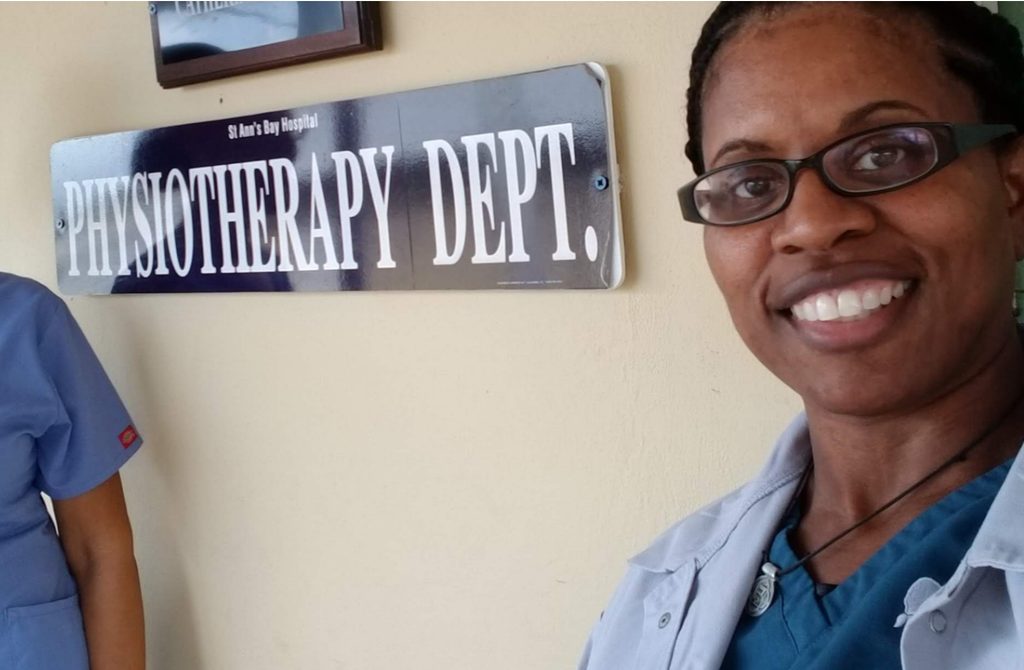
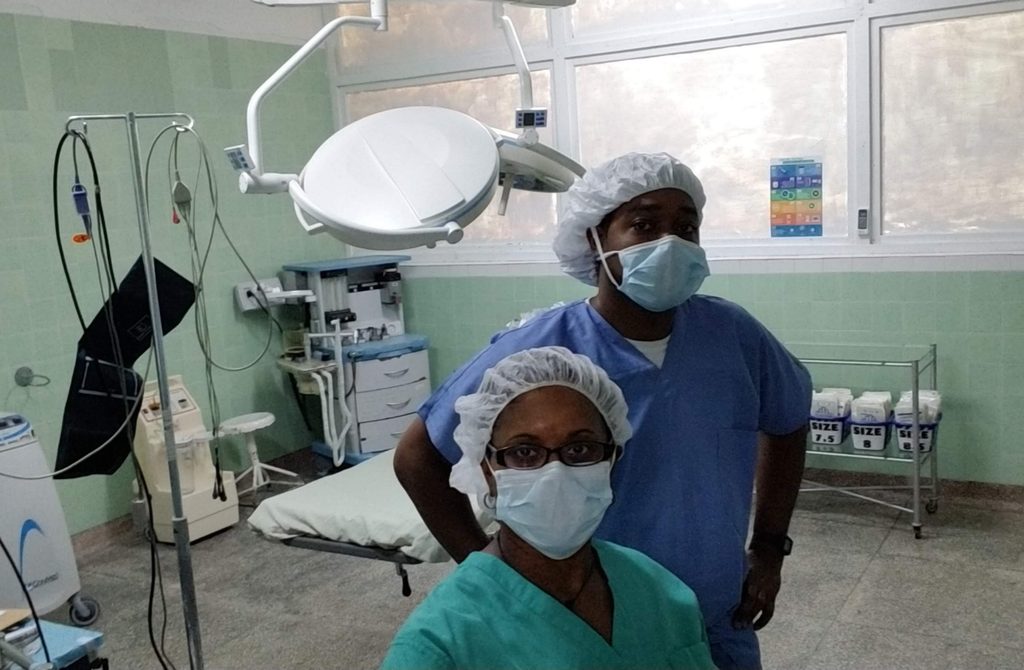
Dugan extends that same instinct to teach and mentor globally. She has traveled to Jamaica through Medicine In Action medical missions, screening and treating patients who might wait an entire day, some walking miles, for a chance to be seen. This fall, Dugan will travel to Nairobi, Kenya to teach the second cohort of African physiotherapists in a pelvic floor specialty program. She plans to stuff her two allotted 50-pound suitcases full of clinical tools and follow the Jackson Education Foundation motto of “Teach One, Treat Many”. Training the therapists will sustain the program so they won’t have to wait for someone from the United States, Europe, or Australia to fly in again.
Life Outside the Clinic
Outside the clinic, Dugan is an audiobook devotee who listens while she runs or bikes. A self-described lover of musicals, she has listened to all 500 episodes of a Hamilton fan podcast. Then she read five biographies of Aaron Burr and Alexander Hamilton just to understand what inspired the show.
Many of her patients, and even some colleagues, don’t know that Dugan is a twin. Her sister talked her into running her first marathon at age 50, after a lifetime of saying no. “I had a lifetime of messaging saying I don’t and I won’t,” Dugan says. “Not that I can’t, but I don’t and I won’t.” She has since run three.
That willingness to challenge her own assumptions took on new meaning when she became a parent. After more than a decade spent caring for other people through pregnancy, experiencing it herself reshaped the way she understood her patients — and her own capacity for change.
The COVID Doula Story
It was that same willingness to say yes, coupled with what Dugan describes as a bit of “selfless curiosity,” that defined her path during the earliest, most frightening weeks of the COVID-19 pandemic. When Dugan’s outpatient PT clinic closed and colleagues were redeployed across the health system, Dugan noticed a gap nobody had solved. Patients were giving birth without a partner in the room. Visitor restrictions meant only one support person could be in a delivery bay, and it usually wasn’t the mother, sister, or friend a woman might have chosen instead. She reached out to the labor and delivery unit at Jefferson to ask if they needed birth doulas. They did, and within weeks she was certified and staffing overnight shifts.
One day in particular from the time period stays with her. It came just after the unrest following George Floyd’s murder shut down Center City Philadelphia. Dugan drove through barricades in a deserted downtown to get to the hospital and delivered three babies that shift instead of the usual one. During one C-section delivery, she recalls sitting next to the birthing mother and helping her to flex her strapped-down hand just enough to touch her newborn’s head before the baby was whisked away to be checked. “It was really just a relief to be able to be of service,” she says, “in a time where many people were just trying to figure out what they should do.”
One Person in a Chain
Dugan doesn’t describe her path into pelvic health as a calling born of personal crisis, the way many in her field do. “My story isn’t that deep,” she says. “It was really that I just saw an opportunity.”
Asked what she’d want someone telling her story 30 years from now to get right, she didn’t reach for a résumé line. “I hope when somebody retells my story that I am really just a person in a chain of events who was able to listen to my heart, see the opportunity, carry it through, and then pass it along to as many people as I could,” she says.
Connect with Nicole Dugan on LinkedIn.
Help us honor Nicole by sharing what her contributions mean to you in the comments below.