Spotting Reading Struggles Early: What Parents Should Know About Screening
October is Dyslexia Awareness Month. Learn the early signs of reading difficulty, what screenings can tell you, and why acting early helps.
For many families, it starts small. A child struggles to remember letter sounds. Rhyming feels hard. Reading a simple word takes real effort.
No single sign means a child has dyslexia. But families don’t have to wait years to learn more about their child’s strengths and needs. That belief has guided AIM for 20 years, since two mothers asked why their daughters struggled to read and why research wasn’t reaching classrooms.
Screening Identifies Risk. It Does Not Diagnose.
Pennsylvania’s Act 47 will bring universal reading screening to schools. Starting in 2027–2028, students in kindergarten through third grade in covered public schools will be screened three times a year.
A screener is a brief check. It flags children who may need extra instruction, monitoring, or further assessment. It is not a diagnosis. A comprehensive evaluation goes deeper. It combines several sources of information to explain why a child is struggling.
AIM‘s Julie Luzier stresses that a screener is only a first step. More testing is needed before anyone makes firm recommendations.
What Signs Can Families Look For?
Dyslexia is not just reversing letters. The International Dyslexia Association describes it as lasting difficulty with accurate or efficient word reading and spelling. Early language weaknesses can sometimes signal later struggles.
Parents may want to watch for ongoing trouble with:
- Learning rhymes
- Remembering letter names and sounds
- Hearing and working with sounds in words
- Learning or finding words
- Sounding out unfamiliar words
- Reading accurately and automatically
- Making expected progress despite good instruction
Family history can matter too. What counts is a pattern that persists.
Why Acting Early Matters
The goal is to help children sooner, not to label them sooner. Research shows targeted intervention works. In one study, children who got intensive help in first or second grade gained nearly twice as much in word reading as those who got the same help in third grade.
Later support still helps. But early action buys time to build foundations before reading trouble affects other subjects and a child’s confidence. Luzier warns that waiting for a child to catch up can mean missing a critical window for language growth.
Looking at the Whole Child
Reading is one piece of the picture. Language, speech, vocabulary, and fine- and visual-motor skills all play a part. That’s why AIM Academy brings educators and specialists together.
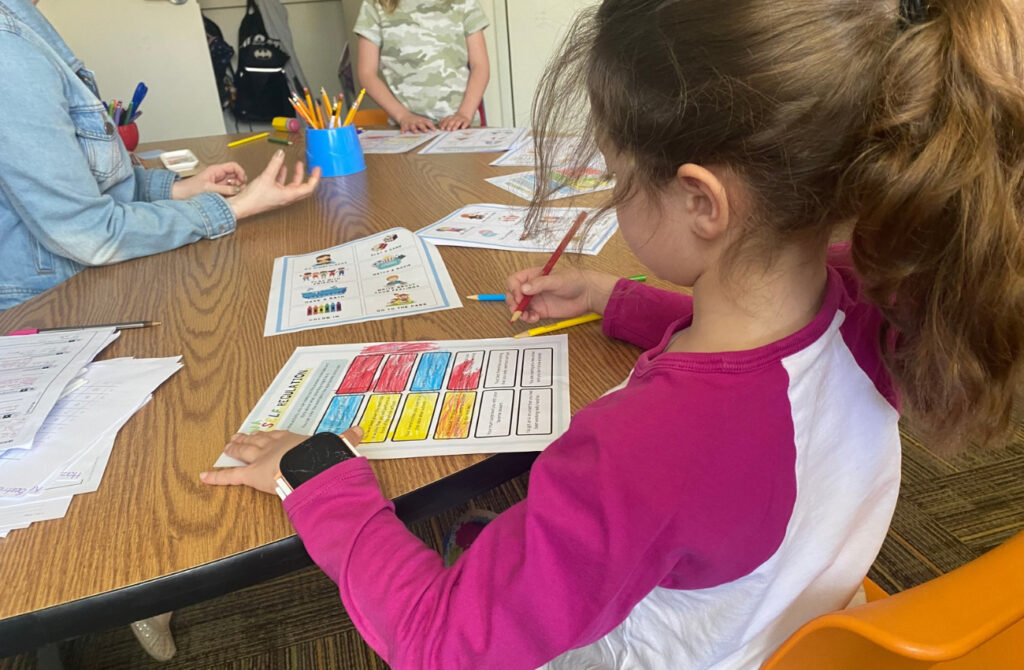
On October 9, AIM will offer a limited, free Early Learning Screening Pilot for kindergarten and first-grade children who are not AIM students. In about an hour, a speech-language pathologist and an occupational therapist review early literacy, language, phonological awareness, vocabulary, and motor skills. Families receive a written summary of strengths and recommendations. The screening is not diagnostic. It helps families decide whether to keep monitoring or seek more assessment.
A Pediatric Checkpoint?
Researchers are exploring whether routine pediatric visits could spot risk sooner. On October 21, AIM Institute will host a free webinar with Dr. Shelley Gray and Dr. R.J. Risueño about a screening questionnaire for pediatricians. Early results are promising. The tool supports referral, not diagnosis, and needs further validation.
From Concern to Action
Screening flags risk. Intervention responds. Progress monitoring shows whether support is working. Evaluation explains persistent difficulties. Free early-reading resources are available through Philadelphia’s Read by 4th.
Early identification isn’t about labels. It’s about connecting children with the right support sooner.
Feature photo courtesy of AIM Academy