Chi-Hsuan Tu: Building Connection, One Brick at a Time
At 17, Chi-Hsuan Tu co-founded Built4Joy to ease fear for hospitalized children, and she leads its growing community of student volunteers with a scientist's curiosity and an artist's eye for what makes a kid feel
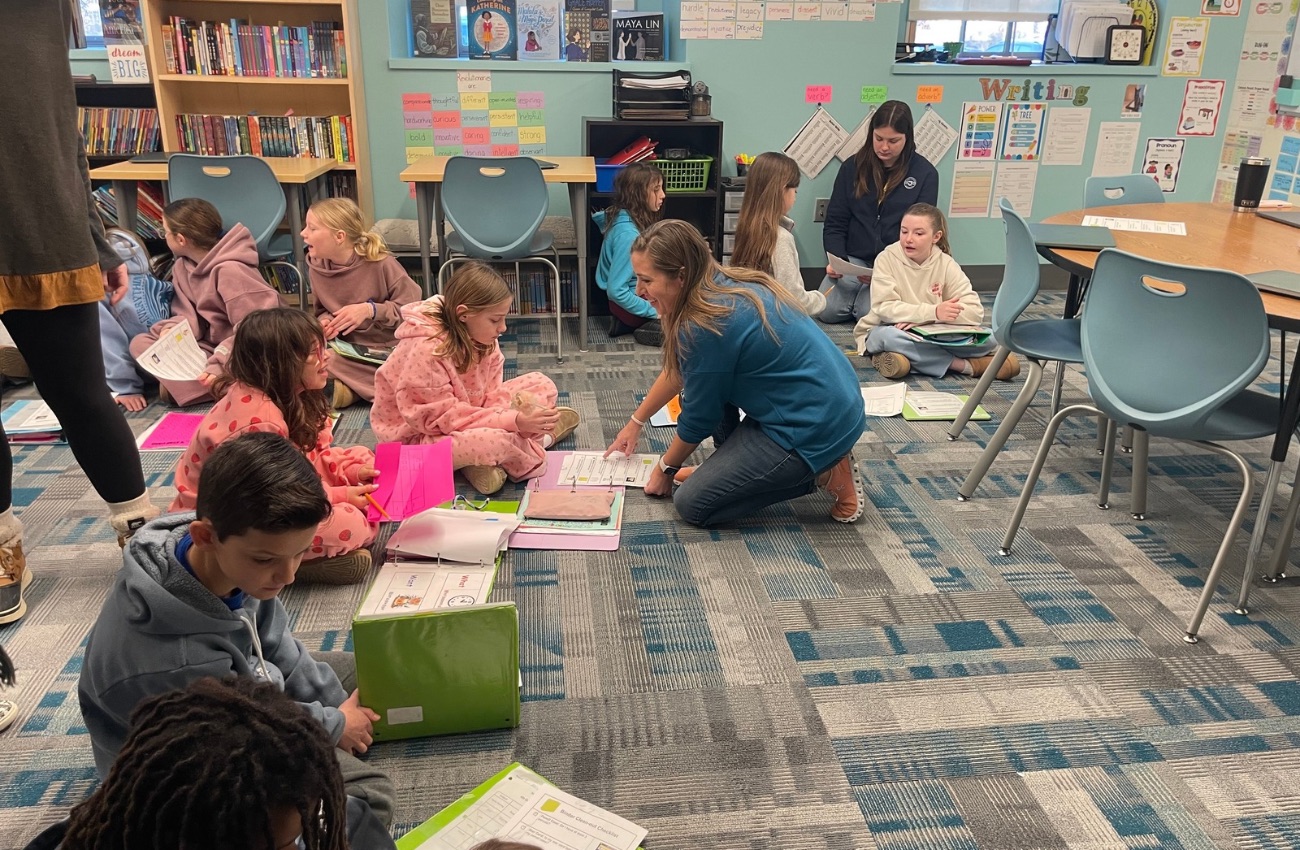
Chi-Hsuan Tu is a senior at Germantown Friends School, a co-founder of the student-led Built4Joy initiative, and a volunteer at St. Christopher’s Hospital for Children, where she builds LEGO hospital scenes alongside young patients. She loves to paint, is weighing a future in public health or public affairs, and spends much of her energy helping newer volunteers and chapters find their footing in a project that has long outgrown the two friends who started it.
Chi-Hsuan Tu is a 2026 Philadelphia Family Young Women of Influence Award Winner
Philadelphia Family’s Women of Influence Awards celebrate exceptional women making significant impacts in our community. Chi-Hsuan was nominated by a colleague and selected based on her achievements and dedication to creating positive change. Each Women of Influence Award Winner has committed to support Family Focus Media’s core values. Together, we are committed to fostering a sense of belonging and empowerment for all families. All backgrounds, races, genders, and sexual orientations are welcome and safe with us.
The Thing That Felt Missing
It started with a summer job that wasn’t a job. Chi-Hsuan began volunteering at St. Christopher’s and loved seeing the kids every day. But the visits were brief, a quick conversation and a small smile, and she felt something was missing. Crosswords, coloring pages and puzzles passed the time without leaving much behind. She wanted connections that lasted.
Her answer was LEGO. She and her co-founder, Lowry Liu, had come across LEGO MRI sets, where children who got to play with a model of the machine grew less anxious and trusted the hospital more. Chi-Hsuan saw a way to teach kids about their care through something familiar. Lowry laughed. He shut the idea down several times and even suggested a pen-pal program instead. She wasn’t ready to give up.
What followed was months of late nights that produced a name, a plan, LEGO designs, education cards, and a long list of doctors and hospital networks to email. Almost nobody wrote back. Lowry was ready to quit. By his account, Chi-Hsuan told him that every rejection brought them one step closer to success, and she turned the group’s attention from problems to solutions. The grant applications that followed were tedious, and for months they went nowhere. Lowry says her encouragement made the work bearable, and he credits her refusal to accept failure with preventing it many times over.
What finally opened the door at St. Christopher’s was listening. Hospital staff raised concerns about budget, sanitation and privacy, and the team reshaped the program around them. Built4Joy provides the LEGO sets, and keeping the model simple made it workable. St. Christopher’s brought the program on in March 2026, at the same hospital where Chi-Hsuan had been volunteering all along.
How a Session Works
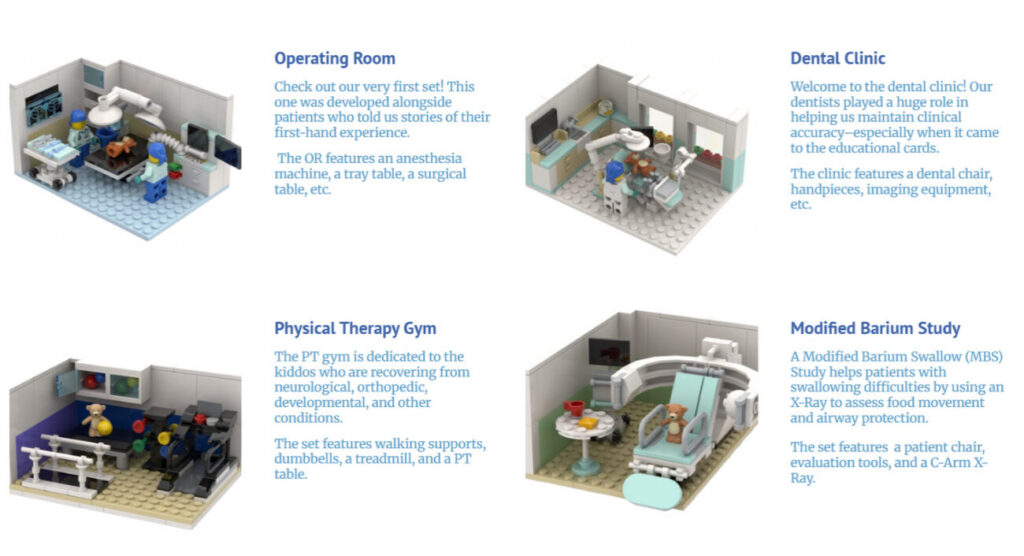
Built4Joy’s sets are custom-designed models of healthcare spaces, built to be familiar before a child ever faces the real thing. Paired with education cards, they let children map their own hospital experience onto what they build. Because the LEGO figures can be personalized, a child can send one through the hospital and invent a story around it, which gives them back a sense of control and confidence. Coloring pages never offered that.
The program runs two ways. In a building session, which takes about 20 minutes, a volunteer and a child put a set together side by side. Building takes time, so the volunteer gets to know the child and talks through what is coming. The kits also work without a volunteer. Child life specialists use them on their own in the hospital playroom and tailor each child’s experience to what that child needs. During the pilot, a single volunteer ran the sessions, and the team asked the hospital which approach it preferred.
Cost matters too. Grant support, and a hard-earned education in writing applications after a run of rejections, brought the price of each set from $40 to $12.
The sessions are meant to build connection, and one early moment stays with the team. A boy building a fire station with a volunteer called his twin brother and introduced the volunteer as his new friend, even though he was still unsure when he would get to go home.
Science, with People in it
Chi-Hsuan’s path to this work began with a question she couldn’t quite answer. “I was always interested in science but couldn’t pinpoint why,” she says. Research at school left her cold. “It wasn’t fulfilling me, it was isolating. I was missing the human perspective of STEM.”
Volunteering gave her what the lab didn’t. She describes healthcare as a place where complicated ideas have to be made accessible, and where the connection matters as much as the concept. It also gave back something she had set aside. “I love doing art and painting, but I shut that side of me,” she says. “This project opened different doors.” She is still undecided about her future, and says the work showed her how many different paths exist.
Lowry sees a motive behind the mindset. Chi-Hsuan once told him she isn’t driven by personal goals but by a pull to connect with other people. In his words, her work and her exhaustion never mattered next to the community she could build.
From Two Friends on FaceTime to a Movement
What began as two friends on a video call grew to 10 officers and dozens of volunteers across Philadelphia, with Key Club, health occupations student groups and other high school clubs becoming a core part of the work. The group has kept growing and now counts about 300 members. Chapters are running outside Pennsylvania, including one in Michigan, and a Haverford chapter is in development. The founders say Built4Joy has reached about 5,000 young people across all its chapters.
Her role in that growth is closest to mentoring. From the start, Chi-Hsuan wanted other volunteers to experience the same lasting connections with patients that she had found. Lowry describes her as a role model for patients, teammates and fellow high schoolers alike, someone who offers resources, advice and support to anyone trying to serve their community.
The team recruits mostly through social media and friends of friends, and the approach stays conversational, with members encouraged to take the lead. When someone emails to volunteer, the founders talk through what that person brings. A graphic designer might help shape the education cards, and a self-described LEGO connoisseur might design sets. Several university groups are now starting from ground zero, and the founders are walking them through how to promote their work. One tailored its sets to a dental office’s colors; another created a vaccination clinic.
“It’s about connecting with the team that you lead,” Lowry says of what he has learned from working beside her. “You need to understand the person deeply and make a cohesive team.” He says what pulled him back from quitting more than once was “having someone I could rely on fully,” and that the tough stretches “brought a sense of enjoyment” because they faced them together.
Giving Back, and What’s Next
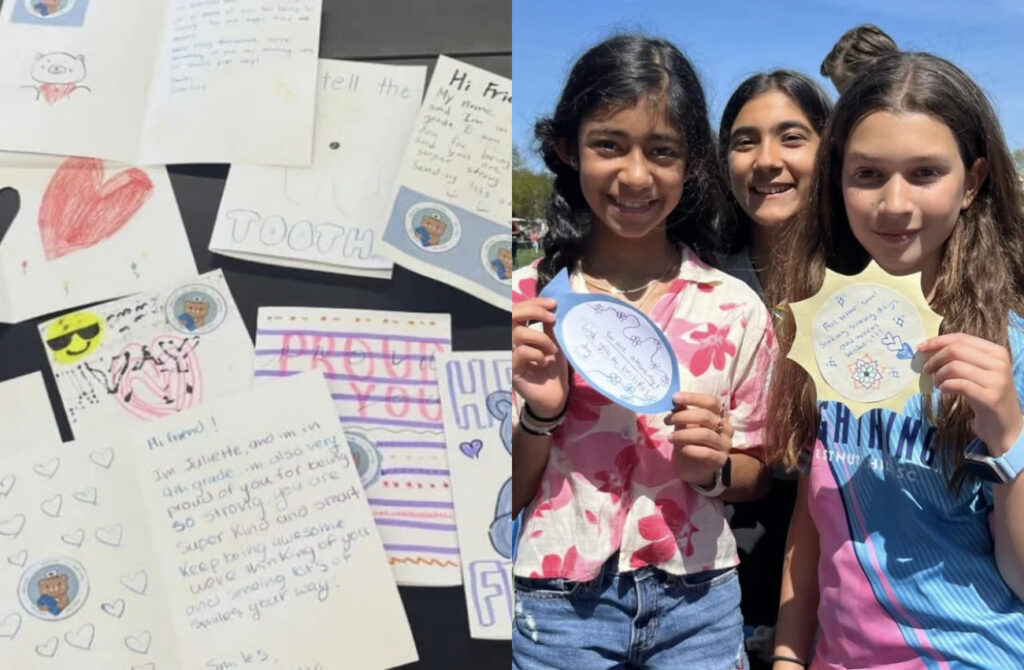
Service runs through all of it. Built4Joy invited the community to write letters to St. Christopher’s patients, to be delivered alongside the LEGO kits, at a Logan Library event. Next, the team is shifting toward educational sessions that use the sets to teach kids about healthcare beyond the hospital, including vaccine schedules, and toward teddy bear clinics like those held in New York. The chapter network is open to anyone who wants to start one.
Both founders want adults to take teenagers more seriously. Teens move through many different environments, they say, so they rarely carry a single perspective, and they bring ambition even to things that feel intimidating.
Chi-Hsuan has advice for a teenager whose big idea is being doubted by everyone around them. “Sometimes I just sit and think, just do it,” she says. “The mental block is the hardest part of the journey.”
Follow Built4Joy on Instagram.
Help us honor Chi-Hsuan by sharing what her contributions mean to you in the comments below.